
Battery size should follow your usage
The right capacity depends on how much electricity you use, when you use it and the size of the solar array. Buying the largest battery is not automatically the best-value answer.
Battery storage can move solar generation from the middle of the day into the evening, and it can also help households make better use of time-of-use electricity tariffs.
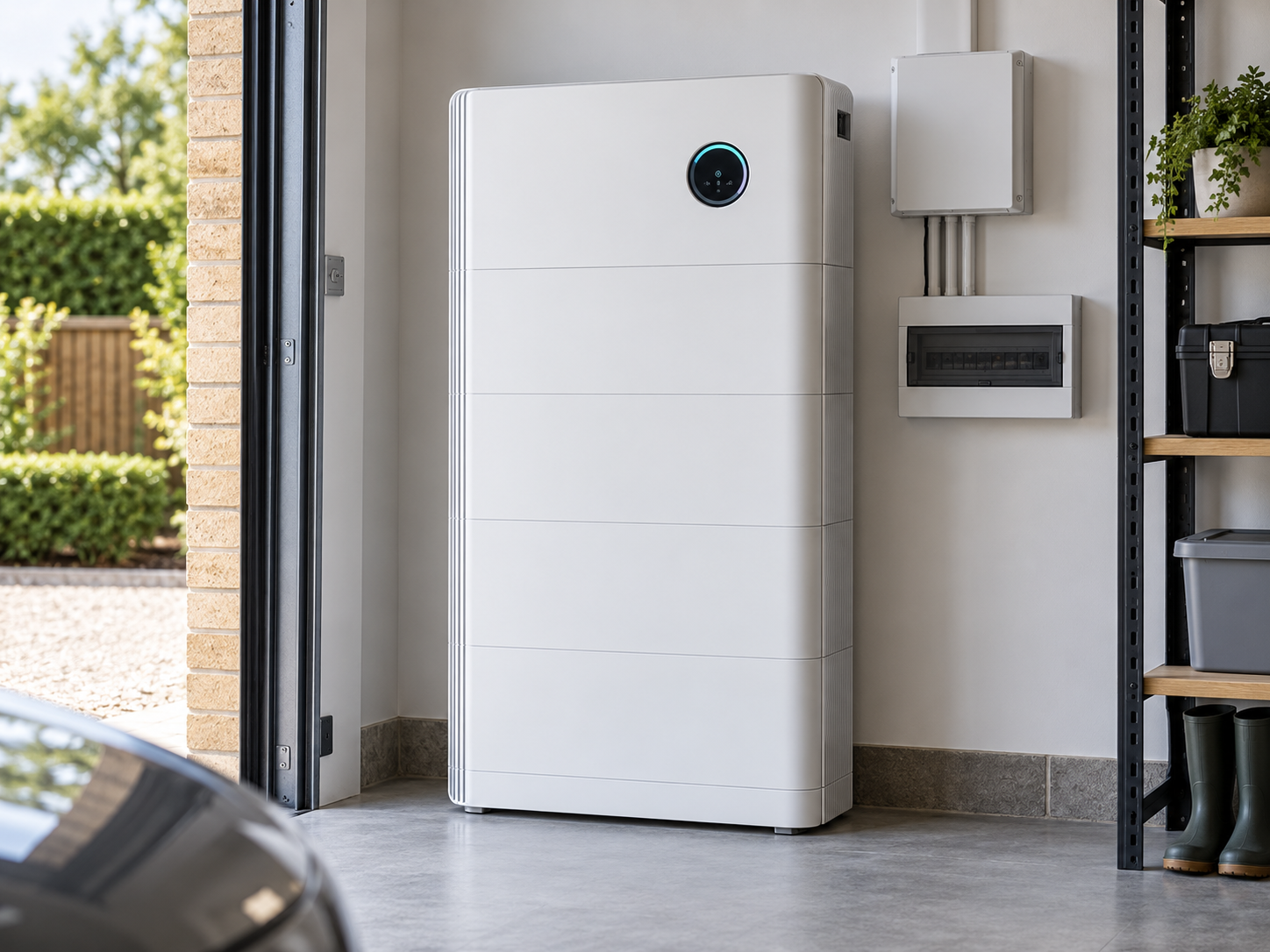
The right capacity depends on how much electricity you use, when you use it and the size of the solar array. Buying the largest battery is not automatically the best-value answer.
A hybrid inverter can manage both PV generation and battery charging. Compatibility and sensible system sizing matter more than simply choosing a battery brand.
Not every battery installation automatically powers the whole home during a grid outage. If backup matters, it needs to be considered in the design and quotation.
Homeowners should be able to see generation, consumption, battery state and grid use clearly enough to understand what the system is doing.
We're based in the Thirsk area and can help you compare battery-only, solar with storage and power-cut backup options before a certified partner checks the final specification.
Home battery storage in ThirskThe final choice depends on the property, budget, desired battery capacity and whether you want a straightforward hybrid setup or a wider home-energy ecosystem.
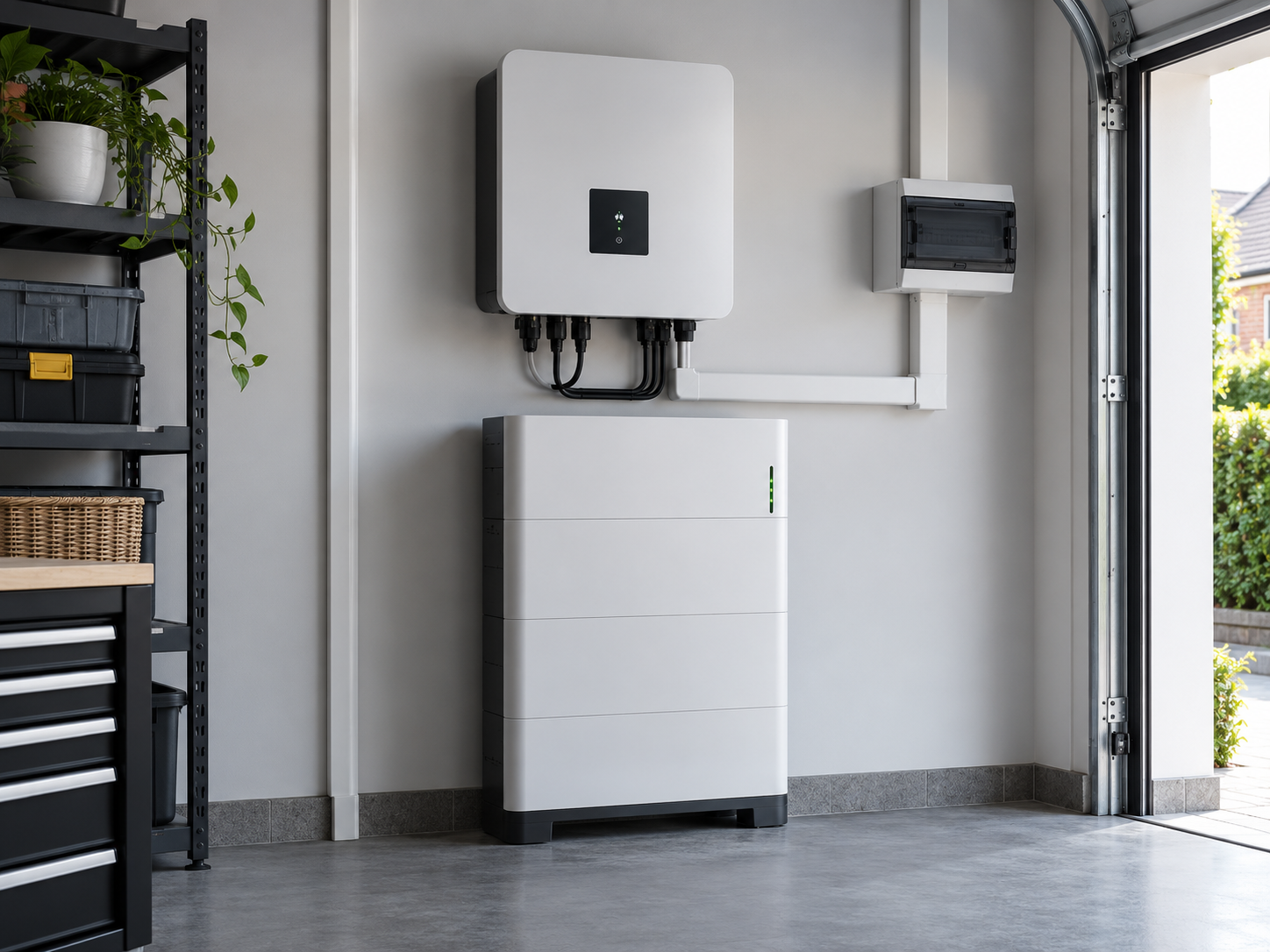 FOX ESS
 offers residential hybrid inverter and battery options with remote monitoring and multiple storage configurations.
SigenergyA modular integrated home-energy system combining inverter, battery and energy management, with options that can extend into DC EV charging.
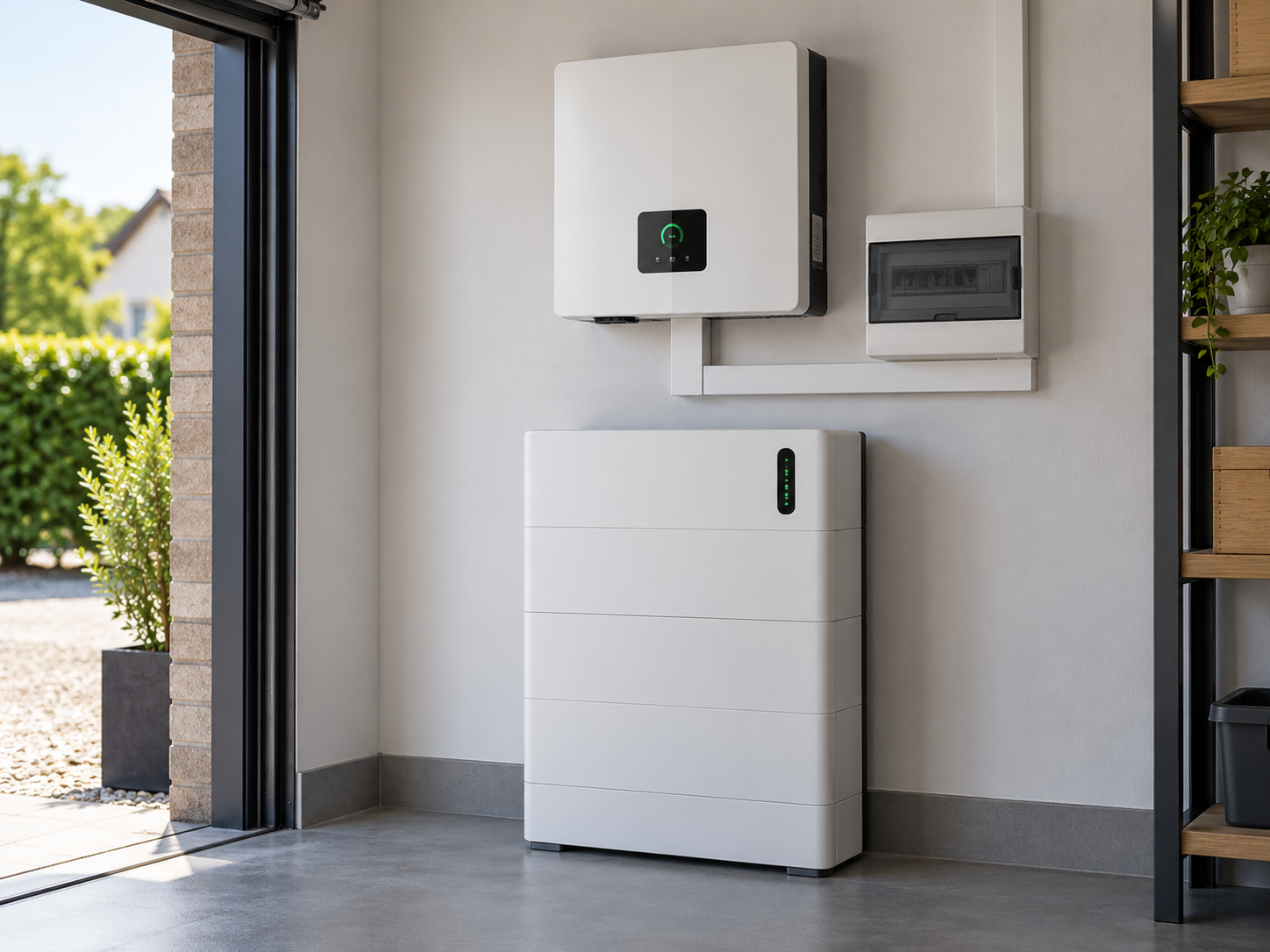 SolaX
SolaX residential hybrid inverters pair with modular battery systems and support smart energy-management functions for the home.
A grid-connected battery does not automatically keep the house running in a blackout. Backup needs to be designed into the electrical system, with the loads, inverter capability and battery capacity agreed up front.
FOX ESSCompatible FOX ESS hybrid systems can provide EPS backup for selected circuits and, where the system design allows, wider-home backup. The exact arrangement depends on the inverter, battery and loads you want supported.
SigenergySigenStor can be combined with a Sigen Energy Gateway for partial-home or whole-home backup, automatically switching the property to off-grid operation when the mains supply fails.
Fridges, lighting, internet, heating controls and selected sockets may be more important than trying to run every high-demand appliance. Backup runtime depends on the battery charge, system power and what the home is using.
Yes. Battery-only systems can charge from the grid, including during cheaper tariff periods where the equipment and tariff support that strategy. The economics depend on the household’s usage and tariff.
Battery size should follow how much electricity you use, when you use it, the size of any solar array and whether the battery will also be used for tariff charging or backup. Bigger is not automatically better value.
Not automatically. Standard grid-connected storage normally needs a specific EPS or gateway arrangement for backup. The circuits, power demand and desired runtime should be designed before installation.
Often, yes. The best route depends on the existing inverter, solar array, electrical setup and whether AC-coupled or hybrid storage makes more sense for the property.
Tell us what you use now and whether you already have solar. We can use that to narrow down a sensible storage route.