
Most UK homes use single-phase charging
A typical domestic supply often supports a 7kW-class home charger. The property supply, vehicle and existing electrical load should be checked before anything is specified.
A smart home charger can work from the grid, a cheaper overnight tariff or surplus solar generation. If you are installing solar anyway, it makes sense to think about the car at the same time.
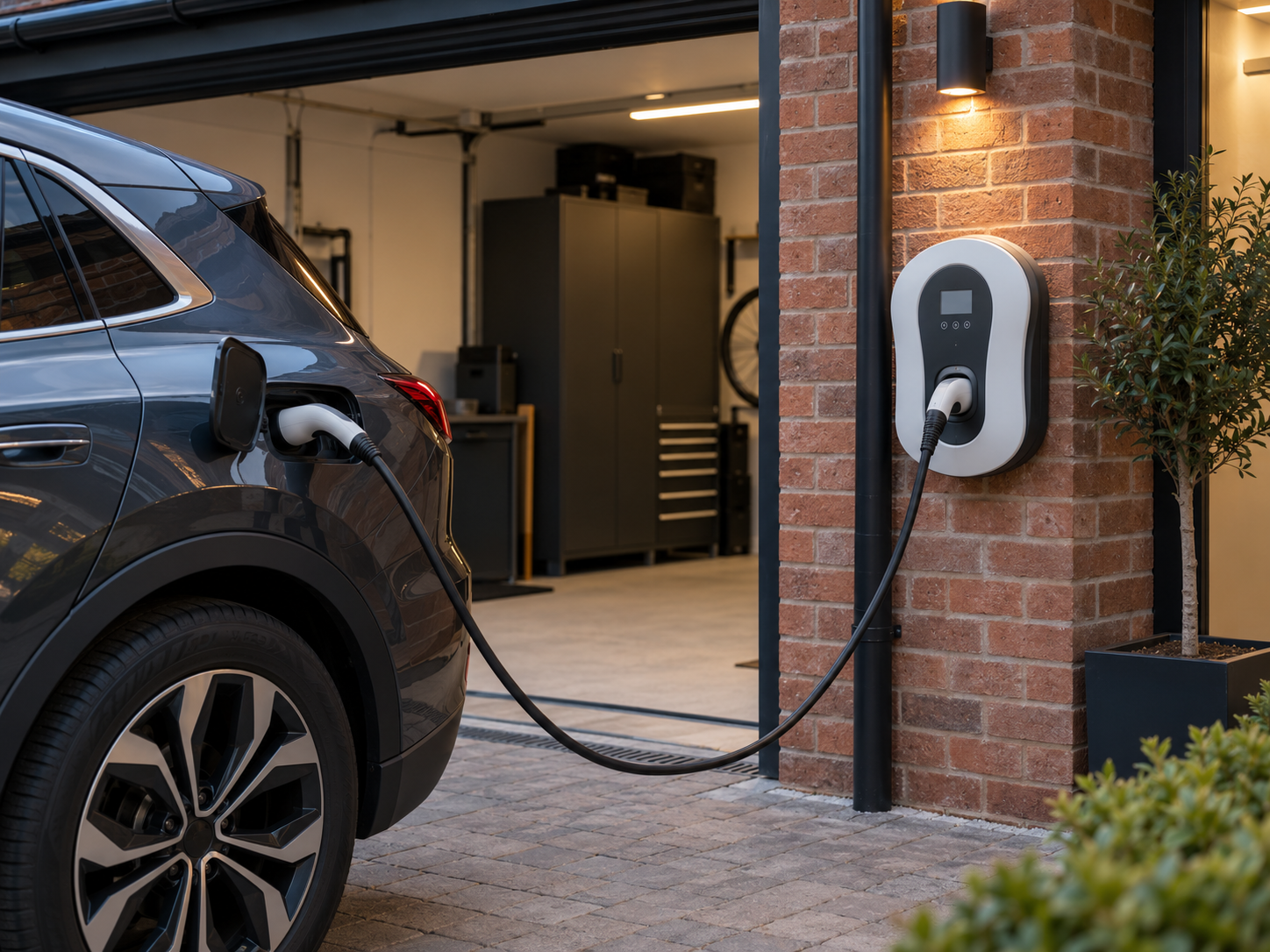
A typical domestic supply often supports a 7kW-class home charger. The property supply, vehicle and existing electrical load should be checked before anything is specified.
A solar-aware charger can use surplus PV generation that would otherwise be exported, helping you put more of your own electricity into the car.
Solar is not the only route to lower-cost charging. Smart tariffs can make overnight charging useful, especially in winter when solar generation is lower.
If the household is adding solar, battery storage or a second EV later, it is worth designing the wider electrical setup with that growth in mind.
myenergi Zappi can operate as a normal grid-powered charger, schedule around tariffs and use solar generation when it is available.
myenergiA smart EV charger designed to work with grid power, solar generation and time-of-use tariffs, making it a strong fit for homes adding PV.
When the home is producing more solar than it needs, compatible charging modes can direct that surplus towards the vehicle.
Battery strategy and EV charging can compete for the same surplus energy, so it is useful to design the priorities before the equipment is chosen.
Tell us about the property and whether you already have, or are considering, solar and battery storage.