
It uses surplus generation
The diverter monitors what the home is generating and consuming, then sends suitable surplus power to a connected resistive heating load such as an immersion heater.
For homes with a suitable immersion heater, a solar power diverter can redirect surplus PV generation into hot water automatically.
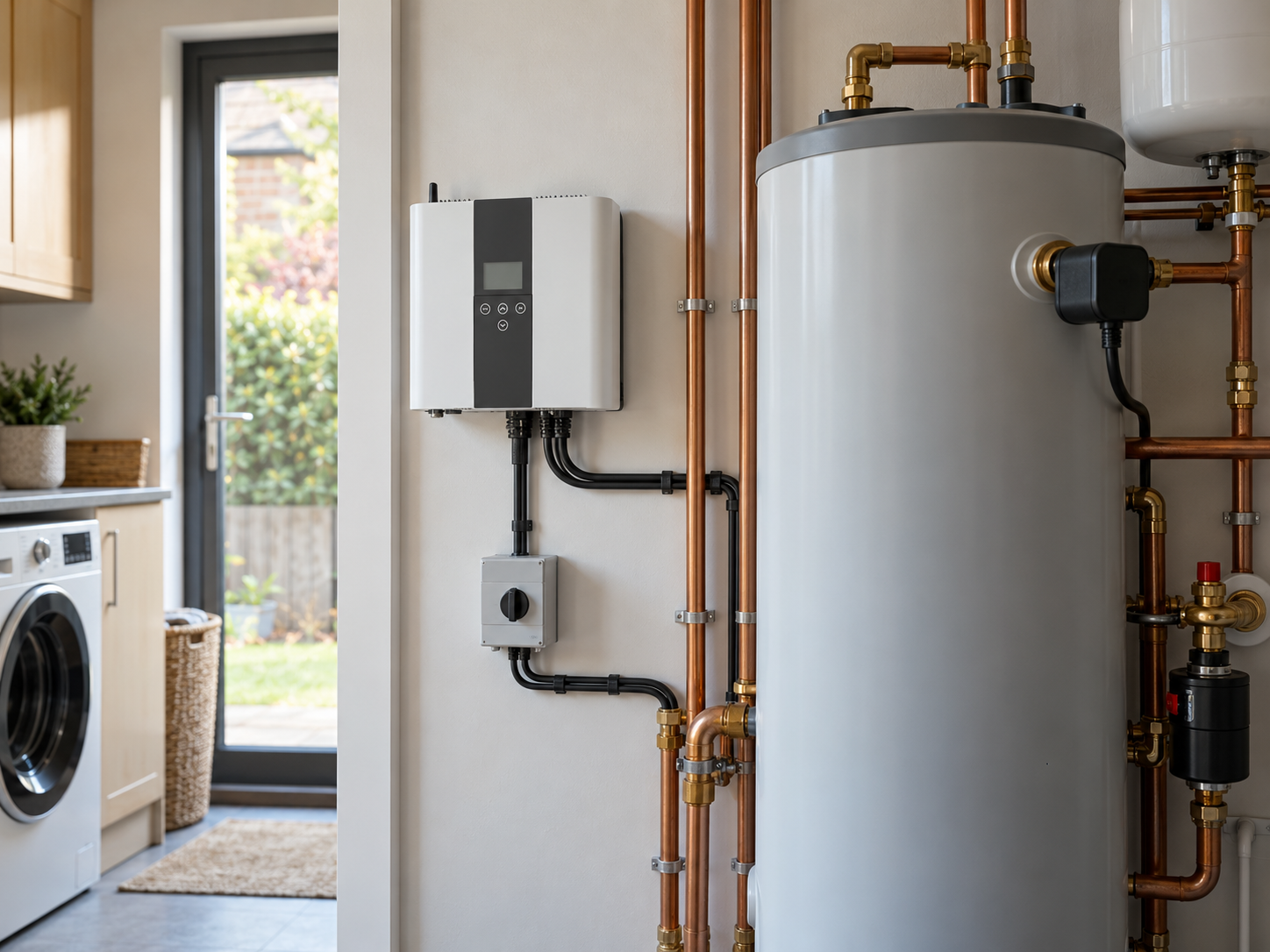
The diverter monitors what the home is generating and consuming, then sends suitable surplus power to a connected resistive heating load such as an immersion heater.
Battery storage and hot-water diversion can both use surplus solar. The right priority depends on household routines, hot-water demand and energy tariffs.
The hot-water cylinder and immersion arrangement need to be suitable. This is something to check as part of the wider solar design rather than assume.
The point is not to create more electricity. It is to use more of what the solar array already generates inside the home.
Eddi is designed specifically to redirect surplus self-generated electricity towards suitable heating loads in the home.
myenergiA solar power diverter that monitors generation and household consumption, then redirects suitable surplus energy towards hot water or another compatible resistive load.
Some households may want the battery to charge first, while others may prefer to heat water earlier. The right setup depends on how the home is used.
A diverter can help keep more solar energy working inside the property instead of exporting it immediately when generation exceeds demand.
Tell us whether you already have solar, whether you have an immersion heater and what else you are considering for the home.