
Start with your usage pattern
A battery should reflect how much electricity the household uses, when that usage happens and how much solar is likely to be available to charge it.
Whether you are adding a battery to an existing solar array or planning solar and storage together, the useful starting point is your household usage, tariff, available generation and what you want the battery to achieve.
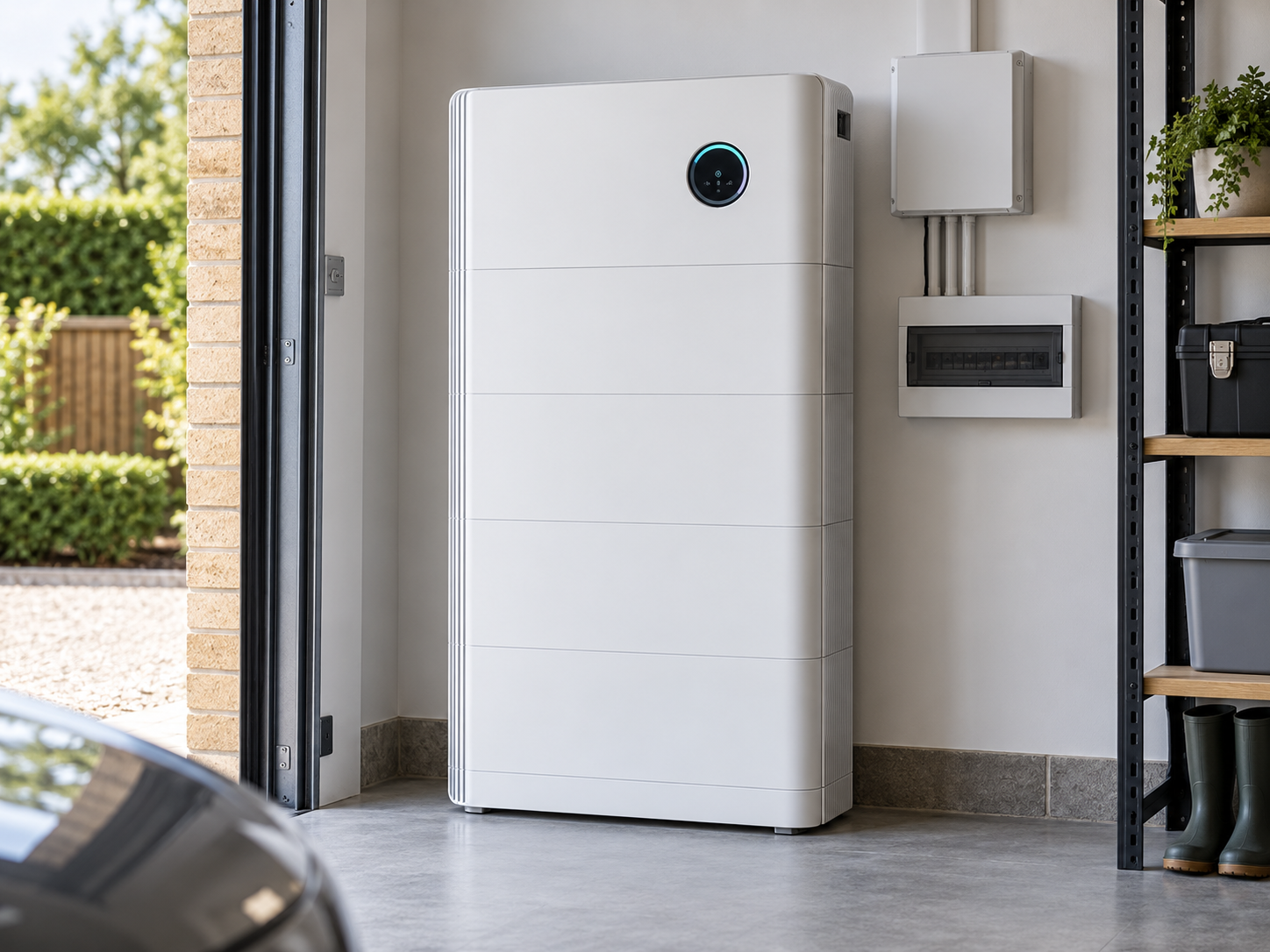
A battery should reflect how much electricity the household uses, when that usage happens and how much solar is likely to be available to charge it.
If you already have solar, the existing inverter, array size, export arrangement and available equipment space all help determine the sensible storage route.
Oversizing storage can add cost without improving the economics if the battery rarely cycles properly. Capacity should follow the household rather than a generic package.
Not every battery system automatically keeps the whole house running during a power cut. If backup matters, say so before the system is specified.
Often yes, but the existing inverter, array, electrical setup and equipment compatibility need checking before the final system is selected.
There is no single right capacity. Household consumption, solar generation, evening usage, tariff and backup requirements all influence sensible sizing.
Many modern systems can be configured around time-of-use tariffs, subject to the equipment, tariff and household strategy. The economics should be considered alongside solar generation.
Goldridge Renewables helps with the enquiry and comparison process. Installation is completed through selected appropriately MCS-certified installation partners where you proceed.
Tell us whether you already have solar, roughly what you use and what you want the battery to achieve. We can narrow down a sensible route before technical verification.